Read Full Description
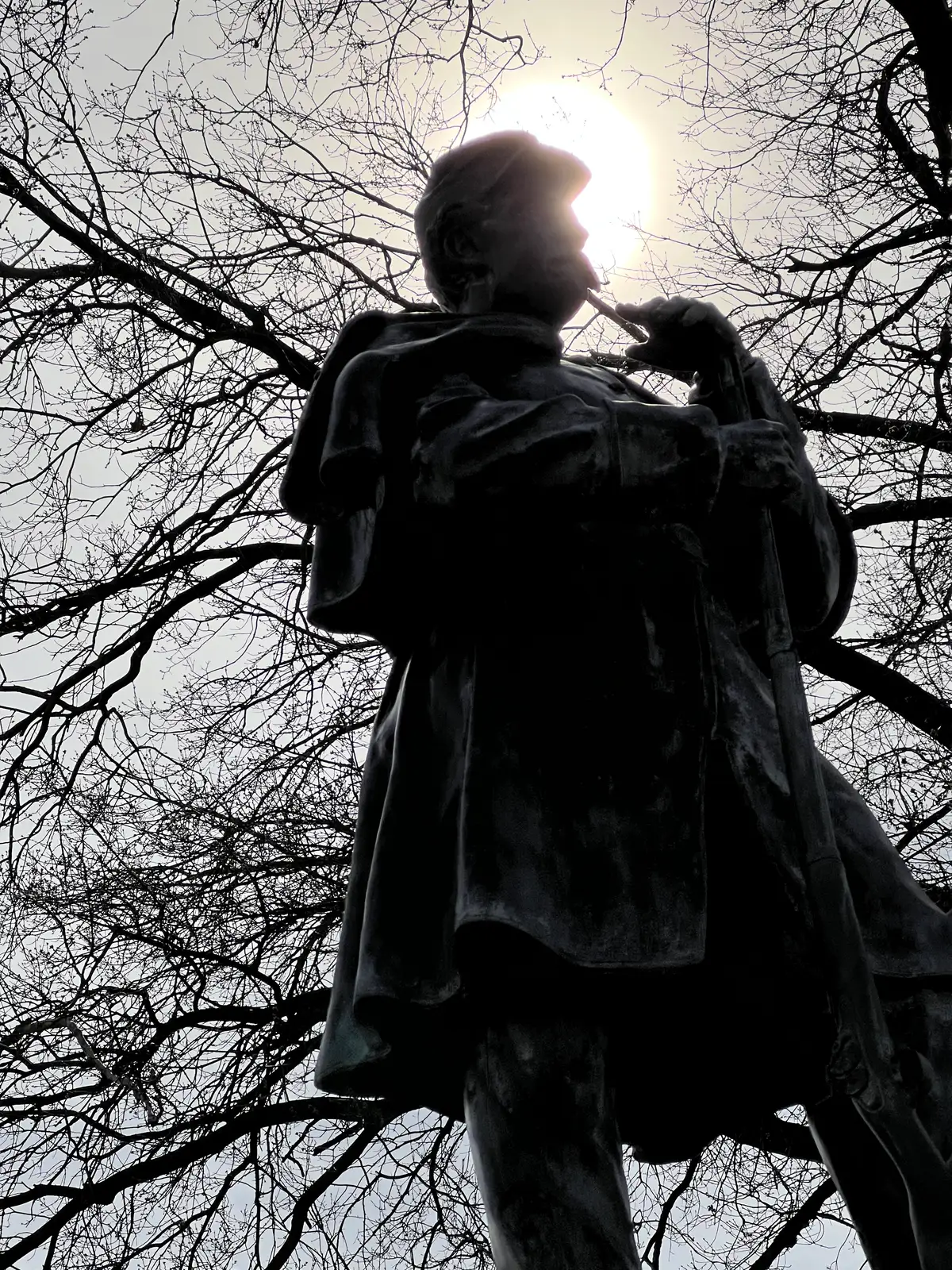
A dramatic, low-angle, high-contrast vertical photograph captures a solemn, heavily patinated bronze statue of a male figure silhouetted against a brilliant, hazy sun. The statue, likely depicting a historical or classical personage, occupies the lower mid-ground, presenting a formidable, near-monochromatic charcoal-grey form with subtle suggestions of deep verdigris or oxidized copper alloy within its folds and contours. The figure appears to be a musician or orator, holding what might be a fife, flute, or a rolled scroll to his mouth, his head slightly tilted upwards, and his gaze directed towards the left. He is garbed in classical drapery, possibly a tunic or toga, with voluminous folds cascading around his form, creating a sense of weight and nobility. The material, likely cast bronze (copper alloy), shows a smooth, aged texture, with deep shadows emphasizing its three-dimensional quality and sculptural relief. Directly behind the statue's head, the sun, a blazing disc, is a potent source of severe backlighting, creating a pronounced halo effect and blowing out the surrounding sky to a brilliant, ethereal off-white, indicative of atmospheric haze or diffusion. The sky transitions to a soft, cool slate-grey and pale cerulean blue towards the periphery of the frame. The entire upper two-thirds of the image, extending into the background, is filled with a dense, intricate network of bare, skeletal branches from a large deciduous tree, possibly a species of oak (Quercus) or maple (Acer), indicating late autumn or winter. These leafless branches are silhouetted in stark black and dark sepia tones, creating a graphic, almost abstract pattern against the lighter sky, their smaller twigs blurring slightly due to a moderate depth of field. The statue itself is sharply in focus, anchoring the composition, while the intricate web of branches provides a textured, softened backdrop. No specific animal, insect, or fungal species are discernible. The overall mood is contemplative and dramatic, emphasizing the interplay of light and shadow, and the enduring presence of art amidst natural forms. There is no visible text or signage.