Read Full Description
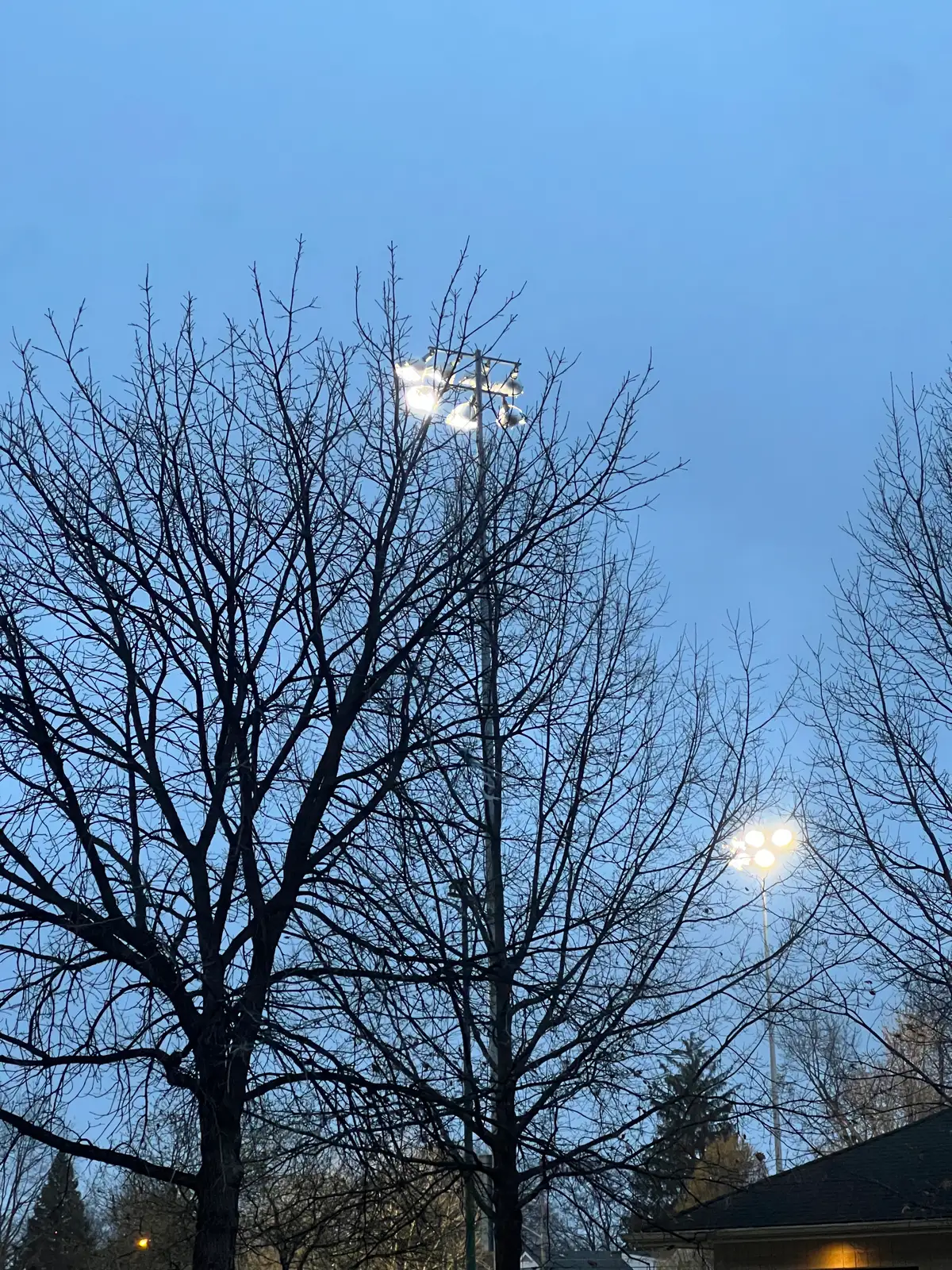
A low-angle, atmospheric photograph captures a twilight or pre-dawn scene, dominated by the skeletal silhouettes of several deciduous trees in their dormant winter state. In the immediate foreground and midground, two prominent trees, likely common urban species such as maple (Acer) or oak (Quercus) though specific identification is impossible without leaves or close-up bark detail, rise with dark, intricate branch networks reaching upwards. Their slender, gnarled branches, appearing a deep charcoal grey to near black against the lighter sky, form a dense, organic screen. The texture of the bark is largely obscured by the backlighting, but the fine, delicate twigs at the canopy's edge are distinctly visible. Behind these foreground trees, two tall, slender metallic poles pierce the sky. These are typical sports stadium light poles, likely constructed from galvanized steel or aluminum, supporting multiple arrays of high-intensity discharge (HID) lamps, possibly metal-halide fixtures given their luminous output. The light fixtures themselves emit an intense, almost ethereal, electric yellow-white light, which causes a significant blooming or halo effect against the dark sky, obscuring individual bulb details. The sky, serving as the backdrop, is a heavy, overcast expanse of muted indigo blue transitioning into soft charcoal grey, suggesting dense atmospheric moisture and cool temperatures. The illumination from the stadium lights casts a subtle, diffuse glow across the upper atmosphere. In the distant background, to the lower right, a low-slung, utilitarian building, possibly a sports complex dugout or maintenance facility, is barely discernible. It features a dark, low-pitched roof, likely composed of asphalt shingles, blending almost entirely into the dark ground cover and distant, indistinct dormant vegetation. The camera perspective is a 'worm's-eye view,' looking steeply upwards, emphasizing the height of the trees and light poles. The depth of field appears moderately deep, encompassing both the foreground branches and the distant light sources, though the extreme luminosity of the lights inherently creates a soft focus or 'bokeh' effect around them. No readable text, signage, or living organisms beyond the trees are discernible.