View High-Res Still Frame
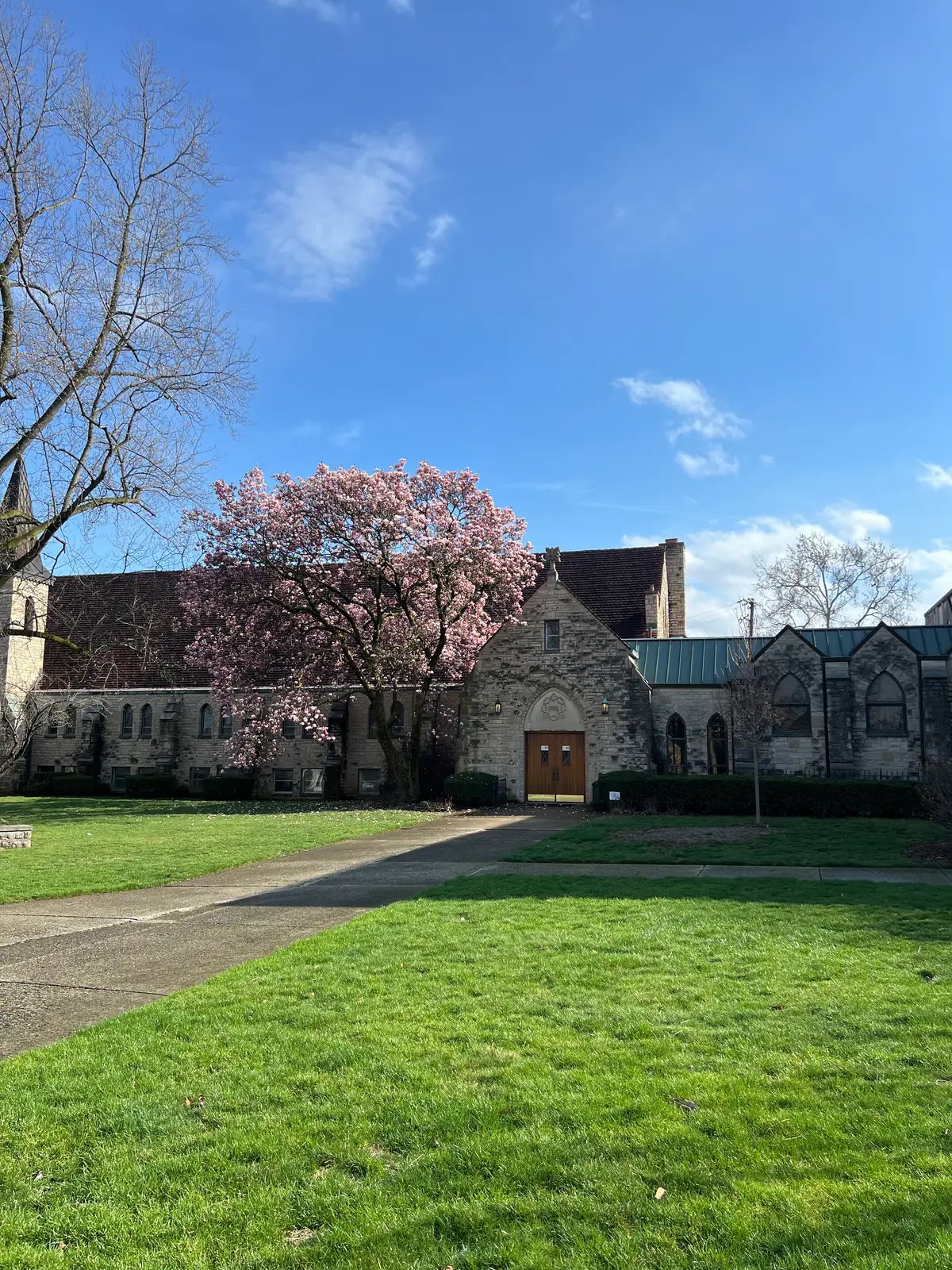
Historic charm meets vibrant spring blooms.
A vibrant, sun-drenched photograph captures the exterior of a stately Gothic Revival church, framed by lush green lawns and a magnificent flowering tree under a brilliant blue sky. Licensable motion asset by Dylan Stanley.
Read Full Description
A vibrant, sun-drenched photograph captures the exterior of a stately Gothic Revival church, framed by lush green lawns and a magnificent flowering tree under a brilliant blue sky. In the foreground, a curved, light grey concrete pathway, its surface appearing smooth but slightly textured, meanders from the lower-left edge towards the center-midground. The pathway is flanked by meticulously manicured lawns of verdant green, likely composed of common turf grasses such as Kentucky bluegrass (Poa pratensis) and various fescue species (Festuca). The individual blades of grass, though small, suggest a healthy, dense growth, with hints of subtle serration. Dominating the midground is a mature Saucer Magnolia (Magnolia x soulangeana) in spectacular full bloom, its dense canopy awash in shades of cerise pink and fuchsia. The delicate, obovate petals, some still unfurling, are rendered with soft, inviting textures. The tree's sturdy, multi-branched trunk, partially visible, exhibits a smooth to slightly furrowed greyish-brown bark. Behind the magnolia, the robust architecture of the church rises, constructed primarily from rough-hewn, light ash-grey to tan natural stone (likely limestone or granite ashlar masonry), showcasing the characteristic robust texture of quarried rock. The building features arched windows, some appearing to contain leaded or stained glass with dark, possibly wrought-iron, tracery. A prominent central entrance, framed by the same stone masonry, holds heavy, dark timber double doors, likely oak or mahogany, suggesting a strong, aged character with subtle grain. The church's steeply pitched roofs are covered in an array of weathered terracotta or slate tiles, displaying a rich palette of burnt sienna, rust, and earthy browns, with some sections exhibiting patches of verdigris-patinated copper flashing or gutters, adding historical depth. To the far left, the gnarled, bare branches of a dormant deciduous tree, possibly an oak (Quercus) or maple (Acer), extend into the frame, their intricate network of twigs silhouetted against the sky. The background is a vast expanse of clear, azure blue sky, dotted with a few wispy, brilliant white cumulus clouds, indicating a crisp, fair-weather day. The scene is bathed in bright, direct sunlight, creating subtle but distinct shadows that define the architectural elements and the tree's form, suggesting either late morning or early afternoon. The camera perspective is slightly low and eye-level, looking gently upwards, allowing the full grandeur of the building and the flowering tree to be captured. The depth of field is moderately deep, ensuring that elements from the foreground pathway to the midground building and the distant sky remain in relatively sharp focus, providing a comprehensive view of the serene and picturesque setting. There are no visible animals, insects, fungi, or readable text within the frame.