Read Full Description
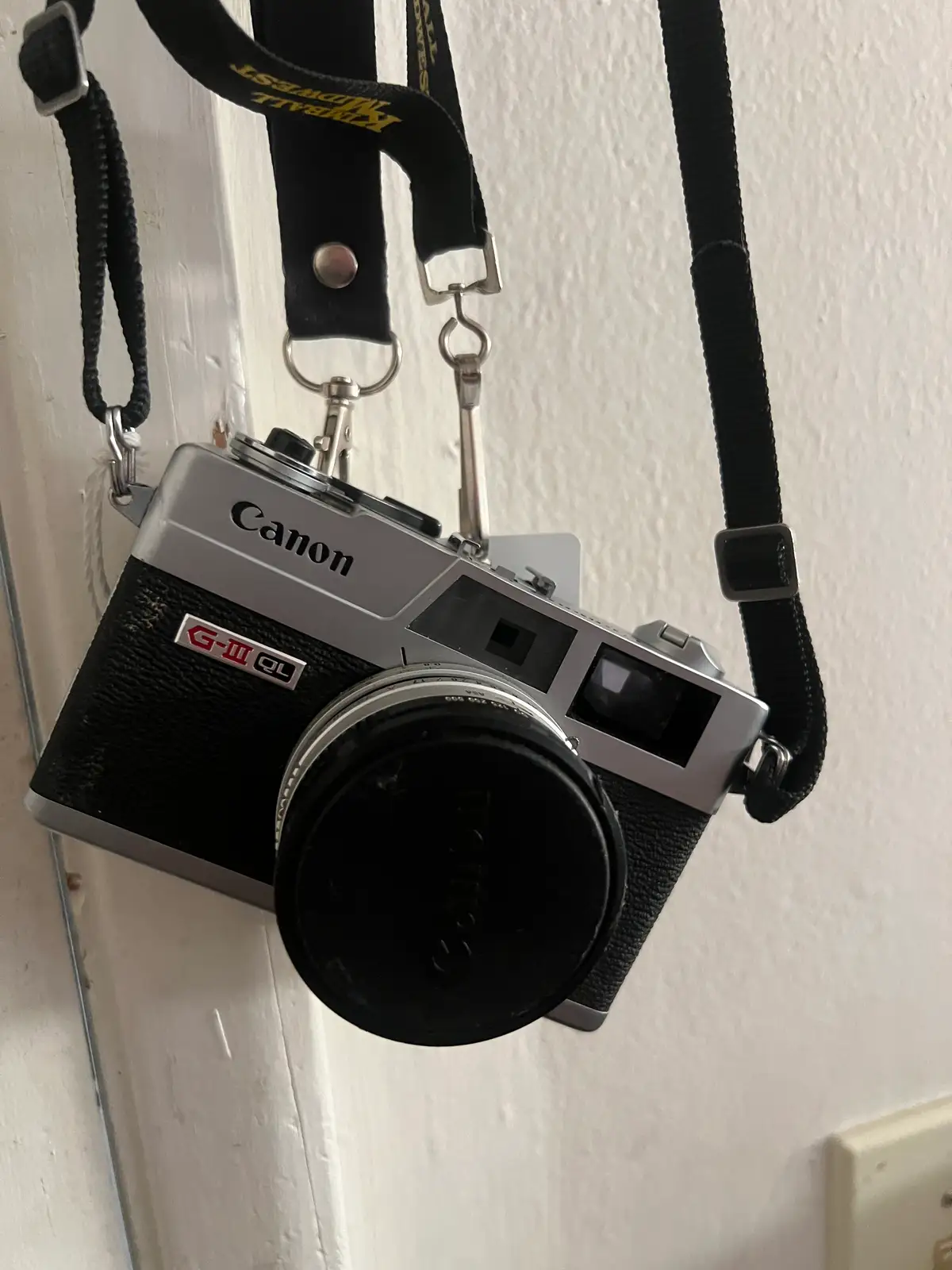
A Canon QL17 G-III rangefinder camera, a classic example of a compact 35mm film camera from the 1970s, is captured in a detailed, slightly low-angle photograph. The camera hangs suspended by its black woven synthetic fabric strap against a plain, off-white painted wall surface. The camera itself showcases a two-tone design: its top and bottom plates feature a satin silver-toned chrome finish, exhibiting a smooth, reflective quality, while the main body is clad in a finely-grained, deep matte black synthetic leatherette, providing a tactile texture. The iconic "Canon" logo is prominently displayed on the top plate, with the model designation "QL17 G-III" on the front panel, where the "G-III" and "QL" are highlighted in a vibrant crimson red. A matte black plastic lens cap, subtly embossed with the Canon logo, covers the lens, indicating the camera is not actively in use. The front elements also reveal the distinct windows for the rangefinder and viewfinder, characterized by their clear, rectangular glass. The black woven strap, adorned with silver-toned metallic buckles and adjusters, includes a small, rectangular mustard yellow fabric patch with the partially legible embroidered text 'J.R. Photography' in black script. The camera appears to be in well-maintained condition, showing minimal signs of wear or patina on its metallic and synthetic surfaces. In the background, the smooth, off-white eggshell paint of the wall serves as a minimalist backdrop. To the far left, a faint, subtle vertical architectural trim line, possibly indicating a door jamb or wall panel seam, provides a minimal geometric element. In the bottom right corner of the frame, a small, light buff beige electrical outlet or switch plate is visible, presenting a slight, smooth textural contrast to the painted drywall. The lighting is soft and diffused, likely ambient indoor light, casting very subtle shadows and highlighting the various material textures without harsh glare. The camera is rendered with critical sharpness due to a shallow depth of field, creating a pleasing, soft bokeh effect in the background, which effectively isolates the vintage device as the primary subject. The perspective is slightly below eye level, looking upwards at the suspended camera, which is angled gently downwards and to the right.