Read Full Description
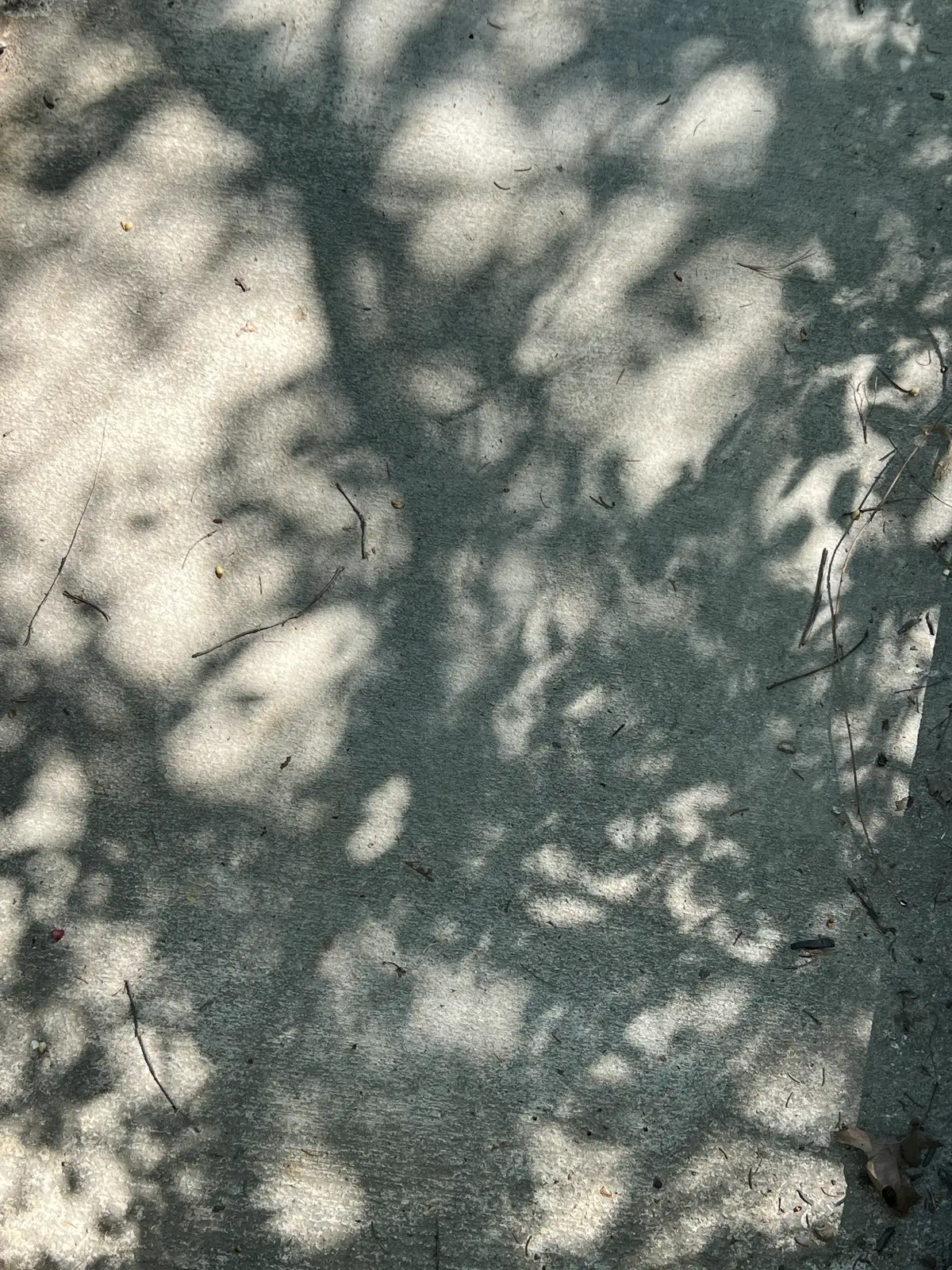
The photograph captures an intimate, high-angle view, likely directly overhead, of a sun-drenched, aged concrete pavement, rendered with exceptional sharpness across its entire surface, indicating a deep depth of field. The dominant visual motif is the dynamic interplay of stark light and intricate shadow patterns cast by the dense canopy of an unseen deciduous tree. These dappled shadows, ranging from deep charcoal gray in their most opaque forms to softer, translucent slate gray where the light filters through sparse foliage, create a complex, organic mosaic across the rectilinear plane of the concrete. The relatively crisp edges of these shadows confirm a strong, direct light source, characteristic of a clear, sunny daytime sky with minimal atmospheric haze. The concrete substrate itself, occupying the entire frame, displays a varied, granular texture. Its primary color is a cool, neutral ash gray, punctuated by subtly darker patches where moisture or grime may have accumulated, and lighter, almost off-white highlights where the sun directly strikes prominent aggregates. Fine hairline cracks spiderweb across sections, revealing the material's age and exposure to thermal cycling and foot traffic. Embedded within and resting upon this surface are scattered fragments of organic matter. These include numerous small, desiccated leaf fragments, primarily in shades of burnt umber, sepia, and reddish-brown, suggesting they are in a state of decay or have fallen during an autumnal period. While specific botanical identification is difficult from these weathered fragments, their broadleaf morphology is consistent with common deciduous trees such as various oak (Quercus spp.) or maple (Acer spp.) species. Interspersed among the leaf litter are several thin, brittle twigs, ranging from dark brown to grayish-black, indicative of fallen branches or petioles. No living insects, such as ants (Formicidae) or fruit flies (Drosophila spp.), nor any visible fungi, mosses (e.g., Bryophytes), or lichens (e.g., Parmelia spp.) are discernible on the concrete surface. The absence of standing water or dew suggests dry atmospheric conditions. The composition, devoid of any discernible horizon or background elements, emphasizes the abstract qualities of light, shadow, and texture, presenting an almost two-dimensional study of pattern and decay. No readable text or signage is present.