View High-Res Still Frame
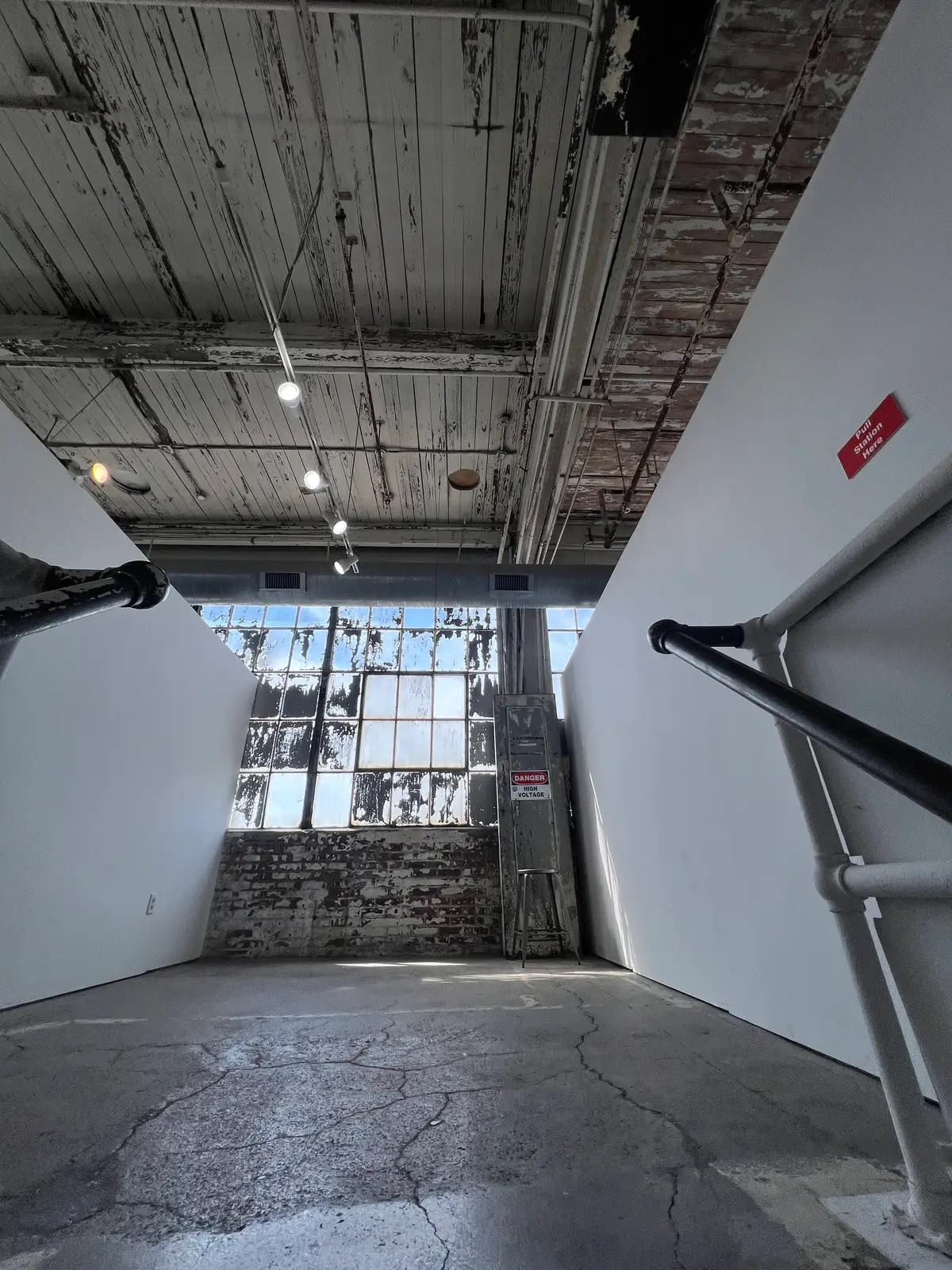
Urban decay meets stark geometry.
The photograph captures an interior architectural space, likely a former industrial or warehouse building, viewed from a low-angle, wide-perspective, looking directly down a narrow corridor or walkway towards a large, multi-paned window...
Read Full Description
The photograph captures an interior architectural space, likely a former industrial or warehouse building, viewed from a low-angle, wide-perspective, looking directly down a narrow corridor or walkway towards a large, multi-paned window in the background. The scene is characterized by a stark, utilitarian aesthetic with evident signs of age and decay. In the immediate foreground, the floor is a heavily cracked and discolored concrete slab, exhibiting a mottled palette of cool grays, charcoal, and hints of pale ochre from accumulated dust and grime. Numerous deep fissures and hairline cracks crisscross the surface, revealing darker sub-layers of concrete and adhering particulate matter, suggesting decades of wear and tear. Two robust structural elements, possibly railings or supports, define the left and right edges of the foreground, extending upwards and slightly inwards from the bottom corners of the frame. These elements are a dark, muted black or very dark charcoal gray, appearing to be painted metal, with a subtly glossy finish catching ambient light. They partially obscure the bottom-left and bottom-right corners of the image. The midground is dominated by two towering, stark white walls, one on the left and one on the right, creating a strong sense of forced perspective and leading lines towards the central window. These walls appear to be constructed from plasterboard or a similar material, painted with a matte, off-white or very pale greige finish. The paint shows minor scuffs and imperfections but is largely intact. On the upper right wall, a small, rectangular red sign with white text is affixed, its precise wording indiscernible but characteristic of a warning or informational notice (e.g., 'NO EXIT' or 'FIRE'). The background is anchored by a large, rectangular industrial-style window, composed of multiple small panes of glass. Many of these panes are broken or missing, revealing glimpses of a hazy, pale cerulean sky and diffuse white clouds beyond, indicating an outdoor setting. The window frame itself appears to be made of heavily weathered, dark-painted wood or rusted metal, contributing to the building's dilapidated character. Below the window, a section of exposed brick wall is visible, showcasing a rich, variegated palette of earthy reds, deep russets, and burnt sienna, with dark mortar lines. The bricks are rough-textured and show signs of efflorescence or staining. Above the window and extending across the ceiling, an array of exposed infrastructure is visible: various metal pipes, conduits, and structural beams, all painted a uniform, dull black or dark gray, running horizontally and vertically. The ceiling structure itself, primarily wooden planks, is severely distressed, with large patches of peeling, flaking white paint revealing the underlying dark timber. Several bare incandescent light bulbs hang from the ceiling, their unshielded filaments emitting bright, direct light, some appearing to be on, contributing to localized highlights on the exposed pipes and peeling paint. The camera's perspective is low, emphasizing the imposing height of the walls and the expanse of the ceiling. The depth of field is relatively deep, keeping both the foreground concrete and the distant window reasonably in focus, though the immediate foreground elements have a slight softness. The lighting is a mix of natural light from the window and artificial light from the bare bulbs, creating a somewhat stark and high-contrast scene with soft shadows. No discernible flora, fauna, or specific architectural style beyond 'industrial utilitarian' can be identified. The atmosphere feels cool, still, and somewhat abandoned.