View High-Res Still Frame
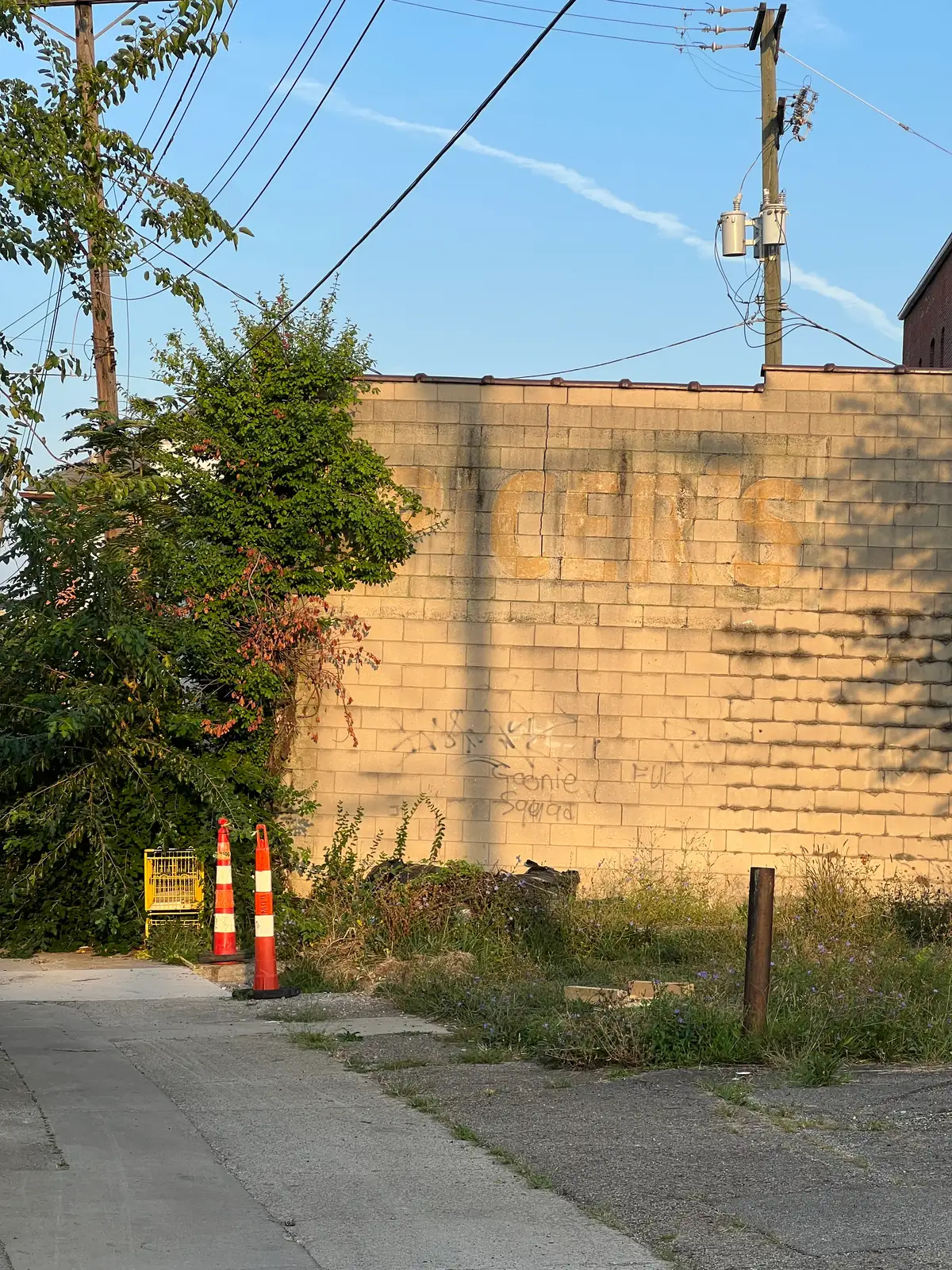
Golden hour glow on forgotten city walls.
The image presents an urban alleyway scene, captured with a slightly low-angle perspective during the golden hour, characterized by warm, directional light and strong, elongated shadows. Licensable motion asset by Dylan Stanley.
Read Full Description
The image presents an urban alleyway scene, captured with a slightly low-angle perspective during the golden hour, characterized by warm, directional light and strong, elongated shadows. The focal plane is set on the midground, rendering the foreground sharp and the background softly blurred, creating a sense of observational intimacy. In the immediate foreground, a weathered concrete path, a pale, mottled grey with a smooth yet worn texture, extends towards the viewer, showing minor cracks and discoloration. To the left, a bright, safety orange traffic cone, approximately 70 centimeters tall with two horizontal reflective white bands, stands firmly, casting a long, distinct shadow diagonally across the concrete. Adjacent to it, partially in shadow, is a rectangular yellow sign, about 30 centimeters wide, with bold black text reading "DANGER" at the top and "HIGH VOLTAGE" below, accompanied by a black lightning bolt symbol. The dominant feature of the midground is a robust, pale sandstone-colored concrete block wall, constructed from stacked cinder blocks, exhibiting the characteristic horizontal mortar lines. The wall's surface is rough and textured, with visible wear, some dark streaks, and subtle areas of efflorescence. High on this wall, faded, sepia-toned block lettering distinctly spells out "DECKS", the word almost dissolving into the warm, ochre glow of the sun-drenched blocks. A tall, slender utility pole, crafted from dark, tarnished steel or possibly heavily weathered wood, casts a sharp, vertical shadow across the wall, highlighting the surface imperfections. To the left of the wall, a dense, untamed thicket of vegetation thrives. This includes a prominent, multi-stemmed shrub, possibly a species of honeysuckle (Lonicera spp.), characterized by its glossy, ovate, dark jade-green leaves and delicate clusters of what appear to be small, spent reddish-pink berries or withered blossoms. Intertwined with this shrub are several younger trees or large saplings, perhaps an invasive species like Tree of Heaven (Ailanthus altissima) or even sumac (Rhus spp.), identifiable by their slightly coarser, pinnately compound leaves in varying shades of olive green. At the base of the wall and within the overgrown area, a mix of common urban weeds, including broadleaf plantain (Plantago major) with its distinctive, deeply veined, elliptical leaves, and various wiry members of the grass family (Poaceae), flourishes in hues of chartreuse and deep emerald. The substrate beneath this vegetation appears to be disturbed soil, mixed with some urban debris. Above the vegetation and crisscrossing the upper left and right quadrants of the frame is a complex web of black electrical and communication wires. These wires are anchored to two distinct utility poles: one on the far left, a stout, weathered wooden pole with deeply furrowed, grey-brown bark-like texture; and another, more distant pole in the upper right, also wooden, supporting a grey, cylindrical electrical transformer. The background is composed of a vast expanse of clear, brilliant cerulean blue sky, punctuated by a few faint, elongated white contrails from distant aircraft. In the far upper right, a sliver of a deep russet-brown brick building, possibly an older commercial or industrial structure, is visible, its roofline indistinct against the sky. The lighting creates a high-contrast scene, emphasizing the textures of the concrete and the organic forms, while the overall mood is one of quiet urban decay and persistent natural reclamation. The bokeh in the background is soft and creamy, suggesting a relatively wide aperture.