Read Full Description
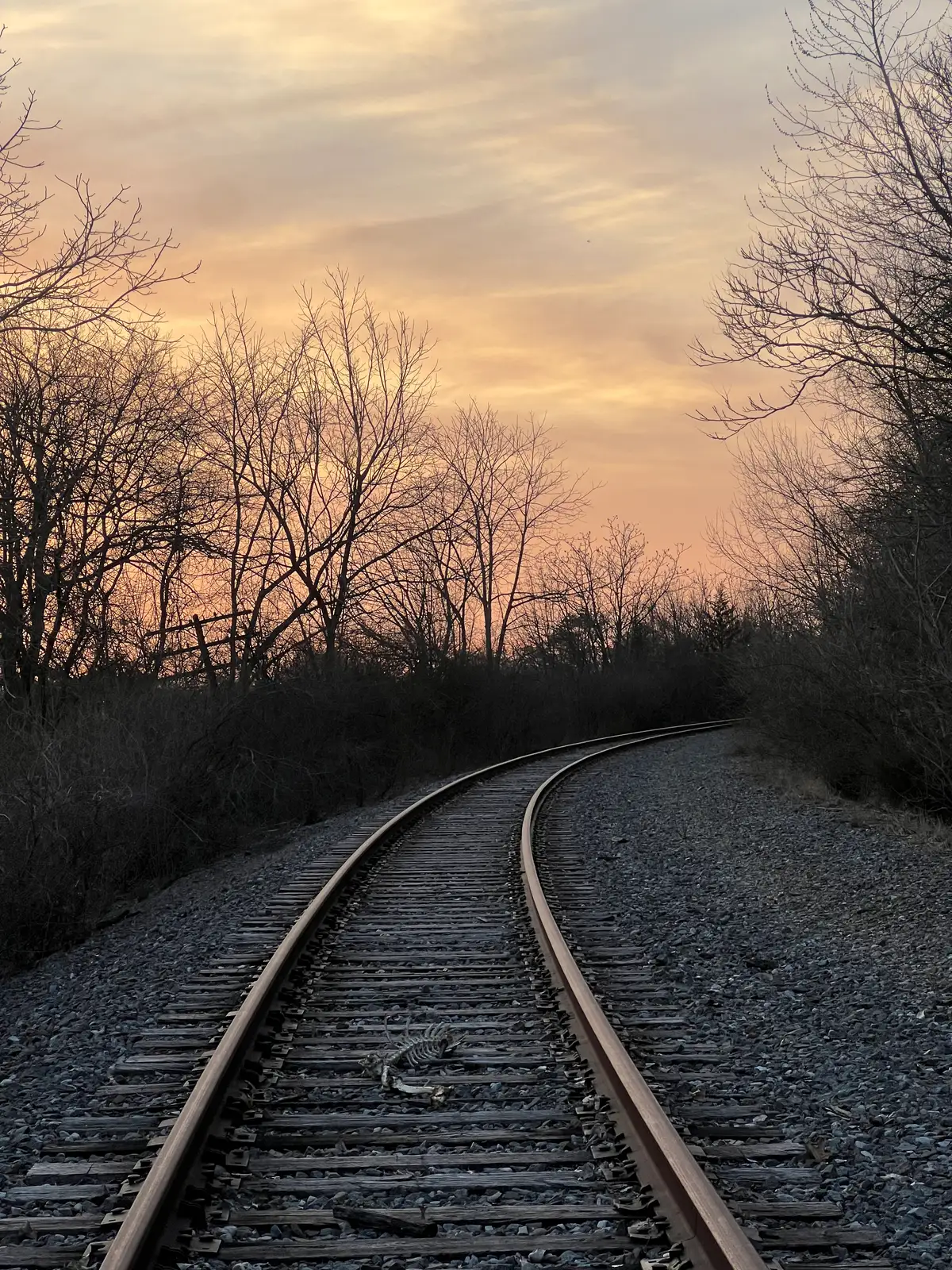
A tranquil, vertical composition captures a set of weathered railroad tracks curving gently towards the right, leading the viewer's eye into a receding horizon under a soft sunset sky. In the immediate foreground, dark umber-toned wooden railroad ties, deeply textured with grain and age, likely oak or treated pine, show signs of weathering and splintering from exposure. These ties are supported by a substantial bed of railway ballast, composed of sharp-edged, varying sizes (approximately 1 to 3 inches) of slate-grey and charcoal-black crushed granite or basalt, with occasional lighter specks of quartz. Two parallel steel rails, exhibiting streaks of burnt sienna and rust orange where corrosion has occurred, gleam faintly under the ambient light. The tracks recede with a relatively deep depth of field, maintaining sharpness from the foreground well into the midground, with a slight softening towards the distant background. On either side of the tracks, the skeletal silhouettes of numerous deciduous trees and dense thickets of dormant shrubs stand bare of leaves, their intricate networks of leafless branches creating delicate, filigreed patterns against the sky. These trees, likely various hardwood species such as oak, maple, or ash, though specific identification is impossible without leaves or closer inspection, dominate the midground as dark, almost sepia-toned forms. No discernible animal, insect, or fungal species are identifiable within the frame. The background is dominated by a serene, pastel-hued sky, which transitions from a soft peach and pale apricot directly above the horizon to whispers of dusty rose and delicate lavender towards the zenith, with diffused, wispy cirrus and altocumulus clouds adding subtle texture. The overall lighting is soft, warm, and indirect, characteristic of a low sun angle during dusk or dawn, illuminating the scene from behind the viewer and casting the trees into partial silhouette. No readable text, signage, or architectural structures are visible.