View High-Res Still Frame
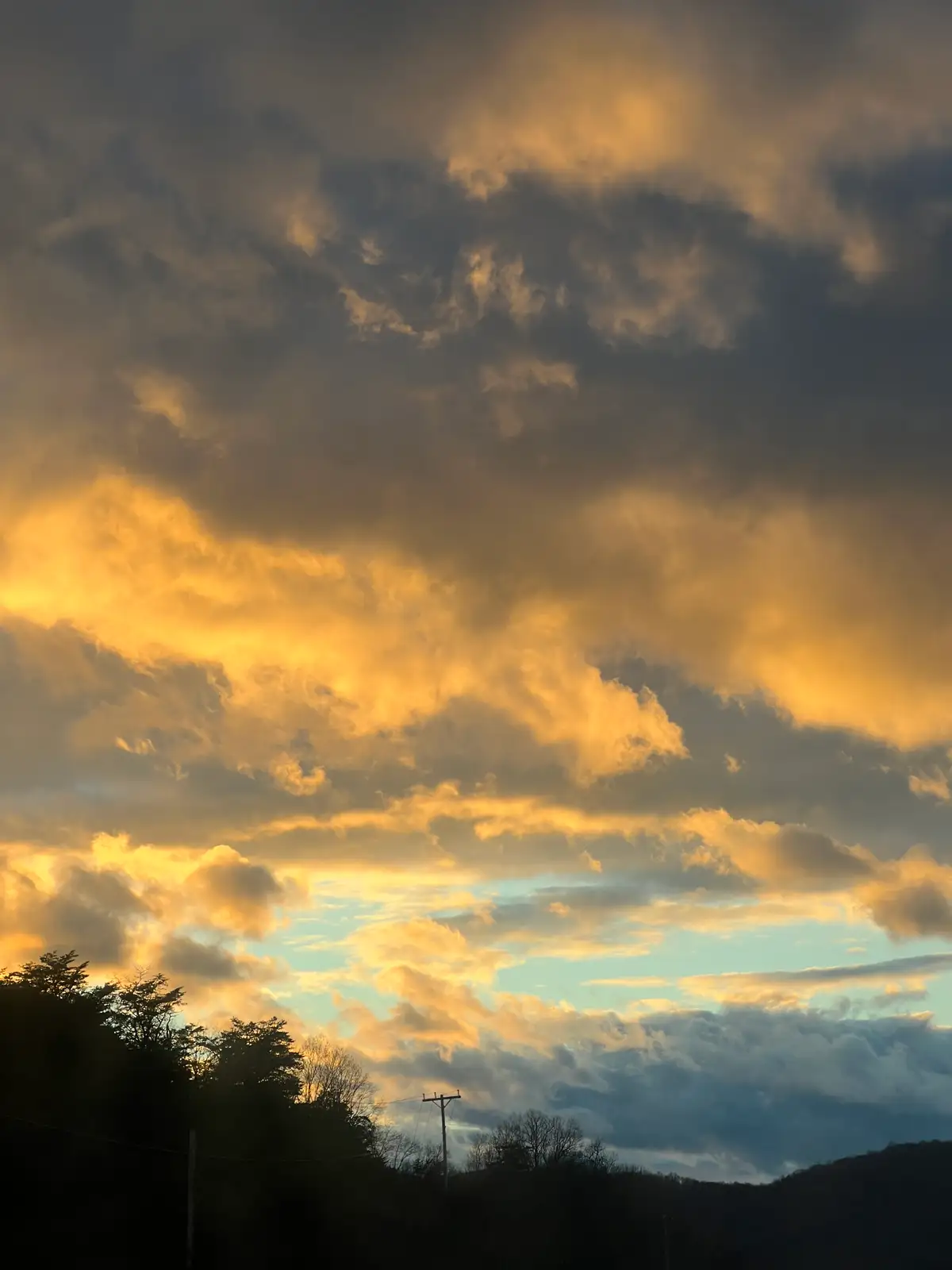
Sky ablaze with golden hour magic.
The image presents a dramatic, vertically oriented cloudscape captured during either the golden hour of sunrise or sunset, dominated by a vibrant interplay of warm and cool tones. Licensable motion asset by Dylan Stanley.
Read Full Description
The image presents a dramatic, vertically oriented cloudscape captured during either the golden hour of sunrise or sunset, dominated by a vibrant interplay of warm and cool tones. The upper two-thirds of the frame are filled with a tumultuous expanse of clouds, primarily consisting of mid-level altocumulus and lower cumulus formations, with potential wisps of cirrus higher up. These clouds are heavily illuminated from a low-angle light source, likely the sun, positioned just beyond the frame to the lower left or right. The central and mid-right portions of the cloud mass glow with an intense palette of warm hues: brilliant amber, goldenrod yellow, radiant marigold, and fiery burnt sienna. These luminous segments are characterized by their soft, diffused texture, with subtle gradations of color indicating the varying thickness and moisture content of the cloud vapor. The undersides of these clouds exhibit an almost painterly quality, with the light creating a sense of three-dimensional depth and billowy forms. Above and around these incandescent areas, the clouds transition into cooler, more somber tones. Muted slate gray, deep charcoal, and hints of purplish-blue are visible, particularly in the upper left quadrant and along the edges of the warmer cloud banks, suggesting areas that are either less directly illuminated or are higher and denser. The textures here are more diffuse and less defined, contributing to an overall sense of atmospheric depth. Beneath the main, warmly lit cloud mass, a slender, horizontal band of clearer sky is visible, revealing a delicate cerulean blue, subtly streaked with hints of aqua green, as if reflecting the last or first rays of indirect light. This band provides a cool, tranquil counterpoint to the dramatic energy of the clouds above. Below this azure strip, another layer of clouds, darker and more indistinct, merges into the silhouetted foreground. The lowest quarter of the image is occupied by a dark, heavily silhouetted expanse of terrain, likely a distant tree line or a series of rolling hills and ridges. The forms are entirely black, devoid of detail, and appear as a jagged, irregular organic contour against the luminous sky. While no specific plant species are discernible, the overall shape suggests dense, mature broadleaf trees (such as various members of the Fagaceae or Sapindaceae families) or coniferous species (such as pines or spruces) on a hill, with their foliage merging into a continuous dark mass. The texture of this silhouette is uniformly dark and irregular, creating a sharp edge against the radiant backdrop. Faintly visible within this silhouette, slightly to the left of the vertical center, is a slender, vertical pole-like structure, possibly a utility pole or antenna, further emphasizing the scale of the distant landscape. The photograph is taken with a slightly upward perspective, allowing the vastness and drama of the sky to dominate the composition. The depth of field is extensive, with the entire cloudscape appearing sharp, while the silhouetted foreground, though lacking internal detail, serves as a strong compositional anchor, framing the celestial display. The lighting quality is soft yet high-contrast, characteristic of golden hour, creating deep shadows in the foreground and brilliant highlights in the clouds, evoking a mood of serenity, wonder, and dramatic natural beauty. No readable text, specific architectural styles, or identifiable animal, insect, or fungal life are present within the frame. The lack of distinct elements suggests a rural or wilderness setting, away from urban light pollution. The atmospheric conditions appear clear enough for strong light transmission, with the visible clouds indicating a dynamic weather pattern. The temperature cues are not overtly present, but the soft light suggests moderate conditions rather than extreme heat or cold.