View High-Res Still Frame
Silent stories in stone.
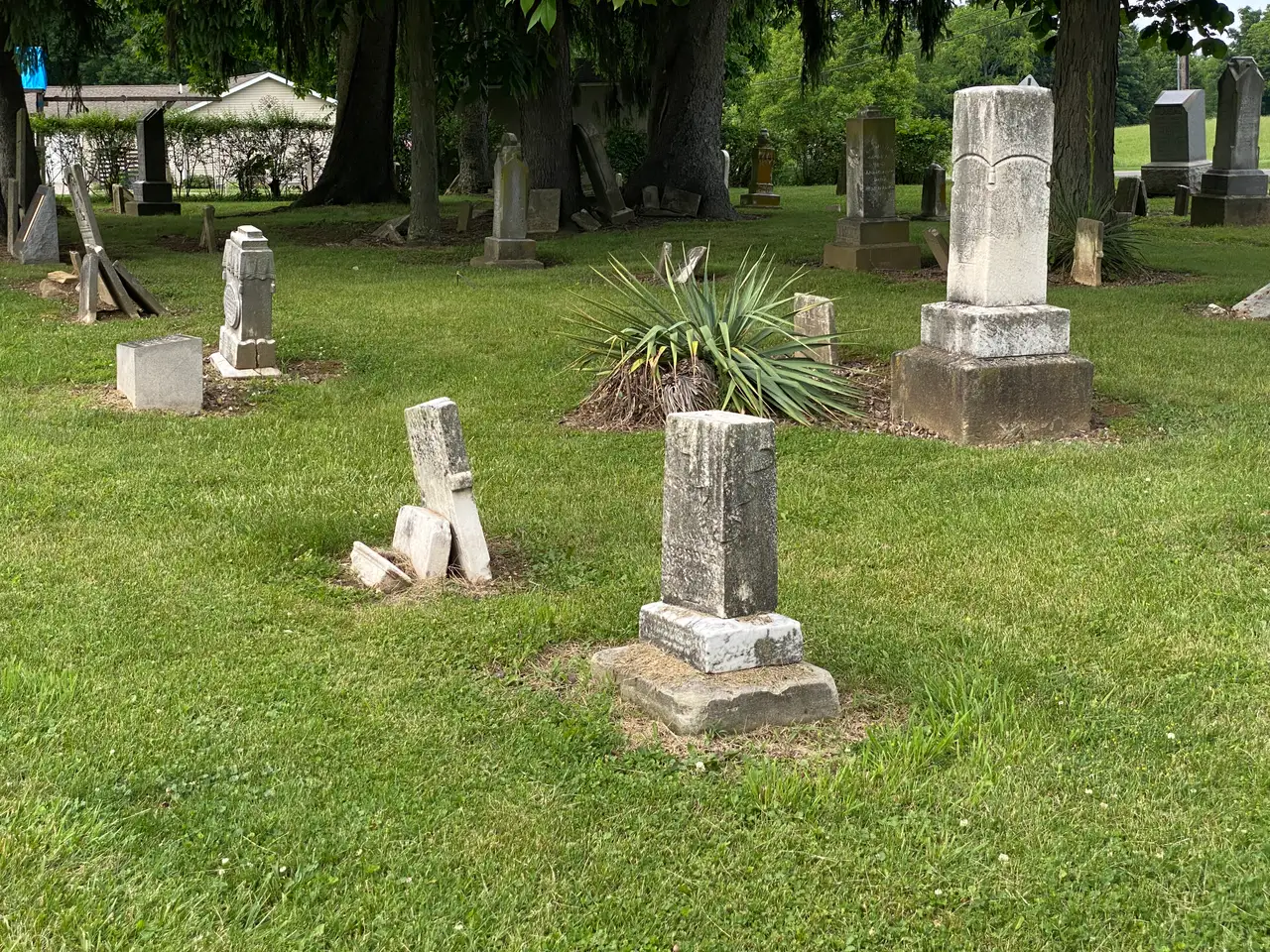
A tranquil, sunlit scene within a historic cemetery on a late spring or early summer day, captured with a relatively wide focal length and a moderate depth of field that subtly blurs the background. Licensable motion asset by Dylan Stanley.
Read Full Description
A tranquil, sunlit scene within a historic cemetery on a late spring or early summer day, captured with a relatively wide focal length and a moderate depth of field that subtly blurs the background. The foreground is dominated by a lush, meticulously maintained lawn, primarily composed of turfgrass species such as Kentucky bluegrass (Poa pratensis) and potentially creeping fescue (Festuca rubra), exhibiting a vibrant emerald to lime green hue. Several weathered grave markers emerge from the verdant turf. In the immediate foreground, slightly left of center, stands a rectangular, upright gravestone crafted from grey granite, heavily weathered to a mottled light grey and off-white with a discernible granular texture. To its left, a smaller, broken monument lies partially embedded in the grass, its lighter grey surface suggesting marble, heavily eroded with rounded edges and faint darker patination. Further left, a third, taller, slender obelisk-style marker, also light grey granite, stands with a slight lean. The midground features a denser concentration of grave markers. Prominently positioned to the mid-right is a substantial, weathered grey granite obelisk-shaped gravestone on a broad, squared base, displaying significant erosion and likely colonized by various grey-green and yellowish-white crustose lichens (e.g., Xanthoparmelia spp., Lecanora spp.). Directly behind the central foreground marker and slightly right, a robust Adam's needle (Yucca filamentosa) plant is centrally featured. Its stiff, sword-like leaves are a dusty blue-green to olive green, radiating outwards from a central rosette, with some older, lower leaves now dried to a desiccated tan and dark brown. The ground around its base is exposed dark brown soil, indicating recent maintenance. Numerous other gravestones, varying in size and design from simple upright slabs to more ornate, spire-topped monuments, are scattered throughout this zone, predominantly fashioned from weathered grey granite or marble, many showing dark stains or patches of biological growth. The background reveals a dense canopy of mature deciduous trees, likely a mix of species such as Northern Red Oak (Quercus rubra) and Sugar Maple (Acer saccharum), their dark, deeply furrowed bark visible on several trunks. Their vibrant green foliage appears verdant and dense, forming a natural barrier. Beyond the trees, a substantial, aged stone wall, possibly constructed from rough-hewn limestone or granite blocks, stretches across the far background, partially obscured by foliage. The sky above is a pale cerulean blue, subtly bright and slightly hazy, suggesting mid-morning or early afternoon. The scene is bathed in soft, diffused natural daylight, casting subtle, elongated shadows from the gravestones and trees, indicating a high sun angle with some atmospheric diffusion or light cloud cover. The overall impression is one of peaceful solemnity and historical presence.