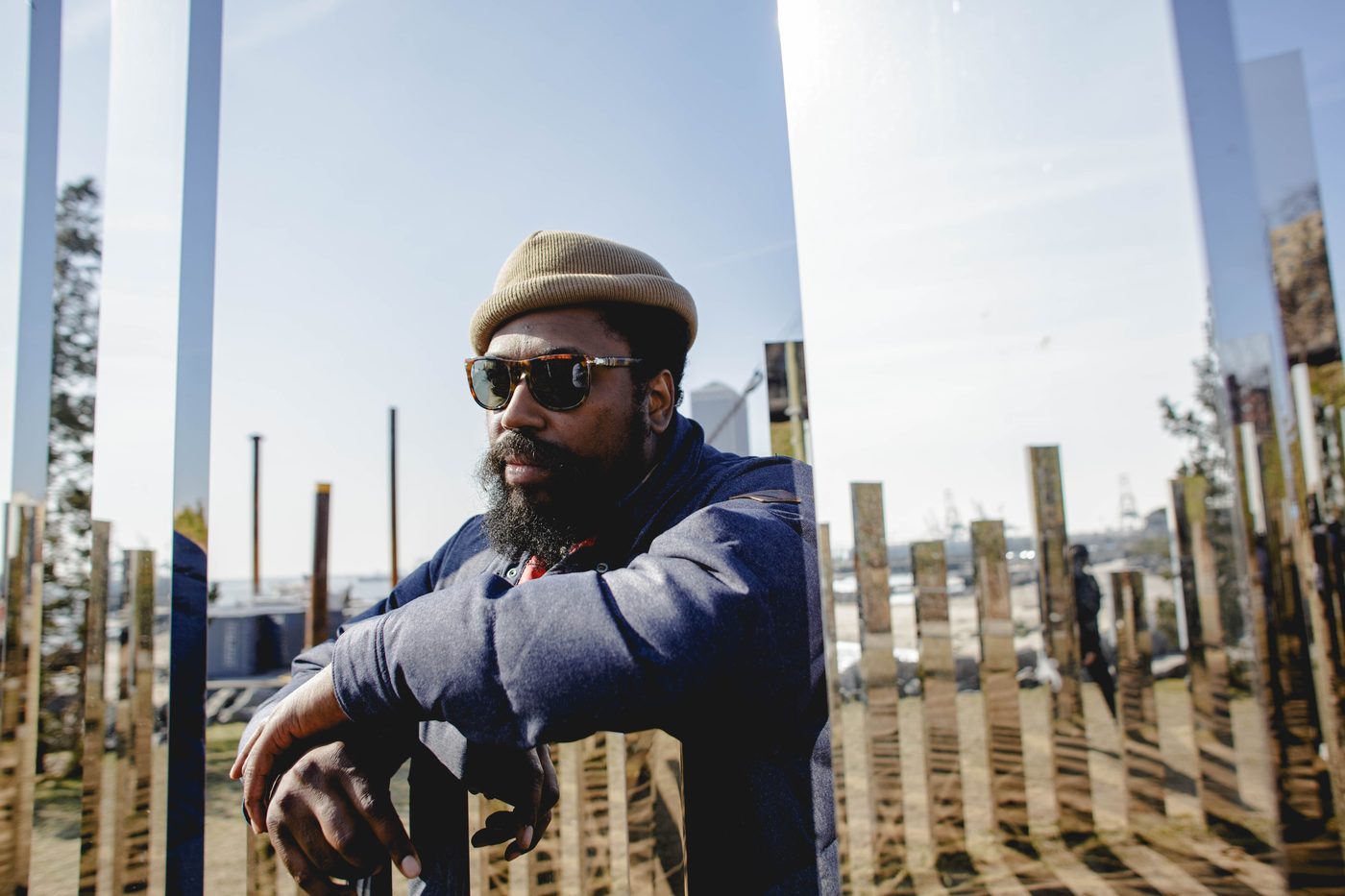
I grew up around Southeastern Ohio with one foot in physical work and the other in computers. I learned to fix things, build things, take machines apart, and make sense of how their pieces worked together. At the same time, I was using early editing programs to manipulate photographs, cut video to music, and turn whatever I could imagine into something I could see.
Those instincts never separated. They became the foundation of how I approach commercial production: art is not an escape from systems, and systems are not the enemy of art. The right structure gives an idea enough support to become real.
That is what Midwest high craft means to me. It is work made with experience, technical skill, collaboration, restraint, and inspiration. It is modern without being ungrounded. It is ambitious without pretending to be somewhere else.
Foundational craft underneath modern tools
At Columbus College of Art and Design, photography sat inside a broader fine-art education. Painting, color theory, composition, structural design, and art history mattered because a camera does not make visual decisions for you. Photography is still writing with light. Every surface has a reflective quality, every shadow has color, and every object changes the light that reaches the lens.
Later, I worked around photographers who had developed their discipline in the film era. They knew their film stocks, lenses, meters, processing, and printing well enough to produce consistent results without seeing the image immediately. They tested. They took notes. They worked with intention because the margin for error was small.
Digital photography made many parts of the process faster and more flexible. AI will change it again. But easier tools do not eliminate the value of understanding what happens underneath them. When discipline, testing, and judgment remain in the process, new technology does not flatten the work. It expands what the craft can do.
Tools change. The responsibility to see clearly, make decisions, and deliver the work does not.
The crew is part of the image
I leaned heavily into photography because it allowed me to make more on my own than large-scale video production did. But independence has never convinced me that one person should do everything.
On serious productions, the result comes from many people carrying their part: producers, stylists, art directors, digital technicians, camera crews, talent, location teams, editors, retouchers, and specialists whose work may never be obvious in the final frame. When those people are aligned, they create something better than the sum of its parts.
The equipment matters. The crew matters more. A camera is only one component inside a larger system of preparation, communication, taste, timing, and trust.
Columbus has the capability
Columbus is not New York or Los Angeles, and it does not need to be. We are in the heartland: close to agriculture, industry, Appalachia, expanding cities, national brands, and the transportation routes that connect them. The place has its own visual language and its own practical way of solving problems.
For a long time, larger markets had a greater concentration of equipment, specialists, and opportunity. The internet and modern production technology changed that equation. Columbus now has experienced crews, serious equipment, connected specialists, agencies, producers, and artists capable of making work at the highest level.
What has not always caught up is the expectation. Too much good work still leaves Ohio by reflex, as though ambition has to be imported. It does not.
The advantage is not simply that Columbus can be cheaper. Cheap is not a creative position. The advantage is that people here know how to build, adapt, collaborate, and solve the actual problem. We bring local knowledge, a lower-friction production environment, strong technical ability, and a perspective shaped by living between different worlds.
A regional point of view belongs on a larger stage
I constantly make images because looking is part of how I understand the world. I photograph landscapes, roads, buildings, people, weather, industrial details, quiet moments, and motion loops that hold atmosphere in a way a single frame cannot. That ongoing practice feeds the commercial work. It keeps the eye alive.
The best production is not generic content manufactured near a convenient airport. It carries the intelligence of the people who made it and the character of the place it came from. Ohio has talented people with experience, hunger, technical depth, and a viewpoint that is not interchangeable with the coasts.
My goal is to help push that expectation forward: connect the people already here, bring more ambitious productions into Columbus, and make work that is effective for the client without becoming less human in the process.
Anything that can be created at the highest level can be created here. The next step is believing it—and building the crew, systems, and opportunities to prove it.
Build the next one here
Whether you are ready to start a project or just want to reach out for a great conversation, I am always open to exploring how we can collaborate. Let's connect and build something exceptional together.